
History of Geometry Dash
From Version 1.0 to 2.2 (2026)  The Evolution of a Rhythm Gaming Legend.
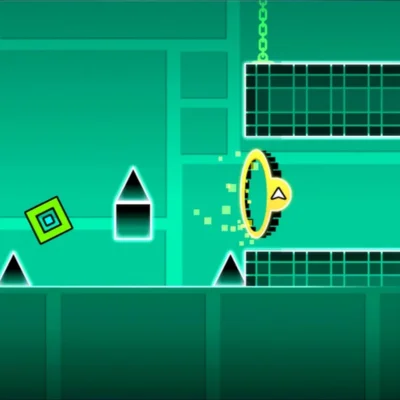
Not many mobile games survive a year. Fewer survive five. Geometry Dash has been running for over a decade, has built a global community, and has completely redefined what an indie mobile game can become.
This is not just a timeline of updates. It is the story of how one Swedish developer and a passionate community turned a simple cube-jumping game into a worldwide creative platform that millions of people still play every single day.
Who Created Geometry Dash?
- Created by Robert Topala, an independent game developer from Sweden
- Known universally across the community as RobTop
- Developed the game solo from his own creative vision
- Drew early inspiration from titles like The Impossible Game
The Origins (2012 – 2013)
How It All Began
In 2012, RobTop began building a simple cube-jumping mobile game. The concept was intentionally stripped back:
- Tap to jump
- Avoid the obstacles
- Reach the end
Simple on paper. Addictive in reality.
The Name Change
Before the launch, the game carried a completely different identity:
- Original name: Geometry Jump
- Final name: Geometry Dash
- Official release date: August 13, 2013
- Launched simultaneously on iOS and Android
Nobody predicted what would follow.
Version 1.0  Seven Levels That Started Everything
| What the Original Game Included | Why It Hooked Players Immediately |
|---|---|
|
Three things made it impossible to put down:
|
That tension between simplicity and difficulty became the game's defining identity from day one.
The Update That Changed Everything | Level Editor (Version 1.3)
Version 1.3 introduced the Level Editor and permanently changed what Geometry Dash could do.
What Players Could Now Do
- Build their own levels completely from scratch.
- Share creations directly with the global community.
- Design levels around specific music tracks.
- Create hard precision challenges, auto levels, and story-driven sequences.
What Happened Next
The community exploded. Creators started producing:
- Music-synced obstacle designs
- Full story-based level sequences
- Art levels and animation showcases
- Experimental mechanical challenges
The level editor did not add a feature. It handed the game's future to its players.
Major Evolution (2014 – 2017)
Update 2.0 (2015)  The Game Grows Up
This was the biggest update in Geometry Dash history at that time. Key additions included:
- Teleportation portals
- Moving objects
- New visual effects and decorations
- Expanded icon and color customization
- New demon level: Geometrical Dominator
Levels began to look and feel like interactive art installations rather than simple obstacle sequences.
Update 2.1 (January 2017): Most Anticipated Update at the Time
Players waited years for this one. It delivered:
- New official level: Fingerdash
- New gameplay form: Spider
- Dash orbs for new movement mechanics
- Daily levels system: always something new to play
- New triggers: shake, scale, pulse, rotate.
Why Daily Levels Mattered: Before daily levels, players had nothing new between major updates. After 2.1, there was always a reason to open the game. That small addition kept millions of players engaged for years.
The Community That Kept the Game Alive (2015 – 2023)
During the long waits between official updates, the community thrived.
Content Creators Who Built the Community
A generation of YouTubers and streamers grew their audiences entirely around Geometry Dash: GD Colon, Viprin, AeonAir, Dorami, and Juniper. Their content consistently brought in new players and kept the existing community energized during long updates.
The Extreme Demon List
The community independently created and maintained one of gaming's most respected unofficial ranking systems. It is an internationally recognized ranking of the hardest user-created levels in existence.
Legendary levels that defined the list:
- Bloodbath
- Cataclysm
- Sonic Wave
- Tartarus
- Acheron
- Silent Clubstep
Clearing a top-ranked demon level earned genuine respect across the community and often represented months of focused daily practice.
What Creators Built During the Long Gaps
Beyond difficulty challenges, the community pushed creative boundaries in every direction:
- Art levels  visually stunning designs built purely for aesthetics
- Animation levels  full animated sequences inside the editor
- Music video recreations  complete visual recreations of real songs
- Meme levels  creative humor that kept the community laughing
- Impossible challenges  mechanical experiments that pushed the editor to its limits
The community proved repeatedly that Geometry Dash was functioning as a creative medium, not just a game.
The Biggest Update Ever | Version 2.2 (December 2023)
After seven years of waiting, update 2.2 arrived in December 2023. The community had waited so long that it became its own cultural story  and then a genuine celebration when it finally released.
New Gameplay Modes
- Platformer Mode: free directional movement replacing the classic auto-scroll format
- Swing Mode: a brand new gameplay mechanic
- Reverse gravity portals: new movement challenges
New Creative Tools
- Camera controls: zoom, pan, and dynamic movement during levels
- Random triggers: unpredictable gameplay elements
- Rebuilt editor system: the most comprehensive editor overhaul ever
New Official Content
- Dash: Brand new official level
- Multiplayer-adjacent mechanic with separate simultaneous player interactions
- Hundreds of new blocks and decorations
Why 2.2 Was a Turning Point: Update 2.2 did not simply add content to an existing game. It redefined the ceiling of what Geometry Dash could be. Platformer Mode alone opened an entirely new category of level design that creators are still actively exploring today.
Geometry Dash Today (2024 – 2025)
| Where the Game Stands Now | Who Plays It Today |
|---|---|
|
Geometry Dash attracts two types of players in 2025:
Both groups find exactly what they are looking for. |
Why Geometry Dash Became a Gaming Legend
Here is what genuinely separates Geometry Dash from every other mobile game of its generation:
Simple controls
Anyone could pick it up in thirty seconds
Fair but demanding
Difficulty felt earned, never cheap
Level editor
Gave players creative ownership of the game's future
Rhythm-based
Connected music and movement in a way nothing else matched
Global community
Sustained the game through years of development gaps
Consistent updates
Each major release genuinely expanded what was possible
Conclusion
From a single cube jumping over spikes on a small screen in 2013 to a worldwide creative platform still growing in 2025, Geometry Dash is one of the most honest success stories in independent game development. RobTop built something with real lasting value. The community built endlessly on top of it. And the result is a game that has fully earned every bit of its legendary reputation.